
Hydraulic Safety Shutdown Systems: Ensuring Reliability in Safety-Critical Oil & Gas Operations
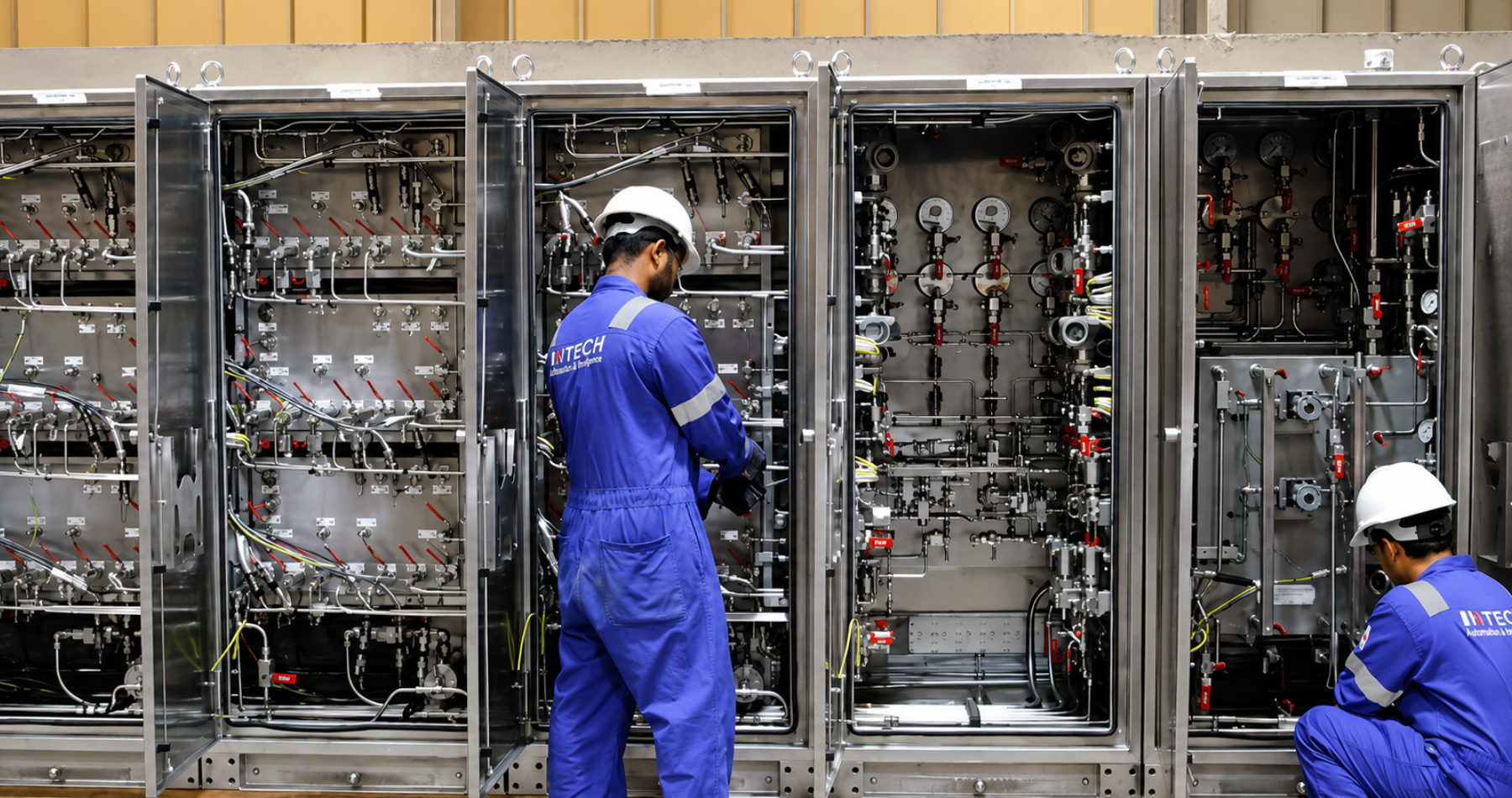
In high-consequence oil & gas facilities, reliability is measured not only by production output but also by the ability to maintain safe and uninterrupted operations under abnormal conditions. While process control systems are designed to optimize production, dedicated safety systems are implemented to protect personnel, assets, and the environment whenever operating conditions exceed safe limits.
This is where hydraulic safety shutdown systems (HSSS) play a critical role. Designed to execute protective actions during hazardous process events, these systems help place equipment and processes into a safe state, preventing operational upsets from escalating into serious safety, environmental, and production consequences.
Because these systems are designed to operate only during abnormal or emergency situations, their reliability cannot be left to chance. Maintaining their availability and functional integrity requires a disciplined operations and maintenance (O&M) strategy focused on system readiness, hydraulic integrity, functional performance, and long-term lifecycle reliability.
Role of Hydraulic Safety Shutdown Systems
Understanding the reliability requirements of these systems begins with understanding the role they play within a facility’s overall protection architecture.
In complex oil & gas operations, multiple layers of protection work together to reduce operational risk and prevent hazardous events. Process instrumentation and field protection devices continuously monitor critical operating parameters, while the facility’s safety instrumented system (SIS) evaluates these signals and initiates shutdown commands whenever unsafe conditions are detected. The HSSS executes these commands by supplying the hydraulic power and control required to actuate safety-critical equipment, such as shutdown valves, emergency isolation valves, and hydraulic actuators. By rapidly moving these final elements to their predefined fail-safe positions, the HSSS isolates hazardous process sections and places the facility into a safe operating state. As a critical component of the SIS architecture, HSSSs are designed and implemented in accordance with functional safety standards such as IEC 61511 and IEC 61508 to deliver the reliability and integrity required for safety-critical applications.
What differentiates these systems from conventional control infrastructure is not their complexity, but the expectations placed upon them. Unlike conventional control systems, these protection layers may remain inactive for extended periods. However, when a shutdown demand occurs, failure to respond flawlessly is simply not an option.
Reliability Begins Long Before a Demand Occurs
The reliability of these safety shutdown systems is established long before an emergency occurs through disciplined engineering, proper installation, preventive maintenance, routine inspection, functional testing, and continuous verification throughout the system lifecycle.
Because HSSS spend most of their service life in standby mode, hidden failures can develop without affecting normal production. Hydraulic leaks, accumulator pressure loss, contaminated hydraulic fluid, sticking solenoid valves, deteriorated seals, actuator wear, valve seizure, corrosion, and instrumentation faults may remain unnoticed until a shutdown demand occurs.
Maintaining system readiness therefore requires regular proof testing, hydraulic pressure verification, and inspection of hydraulic power units (HPUs), accumulators, filters, tubing, manifolds, actuators, and shutdown valves, along with periodic valve stroke testing and functional verification. These activities ensure that every component performs its intended safety function whenever called upon.
By proactively identifying and addressing developing issues, operators can maximize system availability, extend equipment life, and maintain confidence that hydraulic safety shutdown systems will perform reliably during critical events.
Understanding Hidden Failures in Hydraulic Safety Shutdown Systems
Many failures associated with hydraulic safety shutdown systems do not occur suddenly. Instead, they develop gradually through component aging, hydraulic contamination, environmental exposure, inadequate maintenance, or mechanical wear. Because these issues often have little visible impact on day-to-day operations, underlying problems can go unnoticed for extended periods.
Hydraulic contamination, instrumentation drift, aging solenoids, actuator wear, communication failures, bypassed safety functions, and control system obsolescence are all examples of issues that can gradually erode system integrity. In many cases, these deficiencies remain undetected until a shutdown demand exposes them, significantly impairing the system’s ability to execute its intended safety function and introducing substantial operational and process safety risks.


Moving from Reactive Maintenance to Functional Assurance
Traditional maintenance approaches often focus on maintaining individual equipment rather than ensuring the complete safety architecture remains available and capable of performing as intended. Because they are often centered on identifying and correcting faults after they occur, these approaches can be inherently reactive.
As a result, modern reliability programs are shifting toward a functional assurance approach that prioritizes validation of the complete safety function over the condition of individual components. Routine proof testing, partial valve stroke testing, hydraulic pressure verification, functional validation, condition monitoring, advanced diagnostics, and proactive lifecycle management work together to ensure the complete shutdown system remains fully capable of performing its intended safety function whenever required.
Digitalization for Improved System Readiness
As oil & gas facilities continue to pursue higher levels of reliability and operational efficiency, digitalization is transforming how safety shutdown systems are monitored and maintained. Historically, system readiness relied primarily on scheduled inspections and periodic maintenance activities. Today, digital technologies are providing greater visibility into the health and performance of critical protection layers.
Advanced diagnostics, condition monitoring, and data analytics enable operators to assess the condition of hydraulic power units, accumulators, actuators, shutdown valves, solenoid valves, pressure circuits, and associated instrumentation in real time. By identifying abnormal trends and early signs of degradation, maintenance teams can address potential issues before they impact system availability.
Digital technologies can support:
- Real-time monitoring of hydraulic system health and readiness
- Early detection of hydraulic leaks, pressure loss, and component degradation
- Predictive maintenance based on equipment condition and performance trends
- Automated reporting, maintenance records, and compliance documentation
- Improved visibility into proof testing, inspections, and maintenance activities
- Faster diagnostics, troubleshooting, and root cause analysis
By shifting from reactive maintenance to a predictive, data-driven approach, organizations can optimize maintenance resources, reduce unplanned downtime, and strengthen the reliability of hydraulic safety shutdown systems. Ultimately, digitalization enhances system readiness by ensuring these critical protection systems remain prepared to respond whenever they are needed.


The Human Side of System Reliability
While digital technologies continue to enhance visibility into protection system health, technology alone cannot guarantee reliability. The effectiveness of any protection system ultimately depends on the people responsible for designing, operating, testing, and maintaining it throughout its lifecycle. Even well-engineered systems can be compromised by inconsistent maintenance practices, inadequate procedures, or gaps in workforce competency.
For organizations operating across multiple facilities and geographically dispersed assets, maintaining HSSS reliability requires close coordination between engineering, operations, and maintenance teams. Clear maintenance procedures, structured planning, disciplined execution, effective reporting, and continuous workforce development all contribute to sustaining long-term system integrity.
Key success factors include:
- Experienced technical leadership
- Structured maintenance planning and scheduling
- Effective coordination between engineering, operations, and maintenance teams
- Standardized inspection and reporting procedures
- Real-time visibility into maintenance execution
- Ongoing training and competency development
Ultimately, reliable Hydraulic Safety Shutdown Systems depend on both robust technology and disciplined execution.
The True Measure of Hydraulic Safety Shutdown System Reliability
Hydraulic safety shutdown systems are far more than conventional control packages. They represent a critical layer of protection that enables facilities to execute safe, rapid, and reliable shutdown actions during abnormal operating conditions.
Their effectiveness depends on much more than routine maintenance. It requires disciplined engineering, continuous verification, proactive diagnostics, hydraulic system integrity, lifecycle planning, and a sustained commitment to operational excellence.
As oil & gas facilities continue to balance aging infrastructure, increasing operational complexity, and higher expectations for safety and reliability, maintaining the integrity of critical protection systems will remain a strategic priority.
The true measure of these systems is not how they perform every day, but how flawlessly they respond during the rare yet critical moments when protection is demanded. Sustaining that level of readiness is fundamental to protecting people, preserving asset integrity, and ensuring safe, reliable, and sustainable oil & gas operations.